South Clyde Energy Centre: Opening, Jobs and Local Impact
A simple guide to Glasgow’s new energy-from-waste facility, including its location, purpose, capacity, environmental controls and expected opening date

Introduction
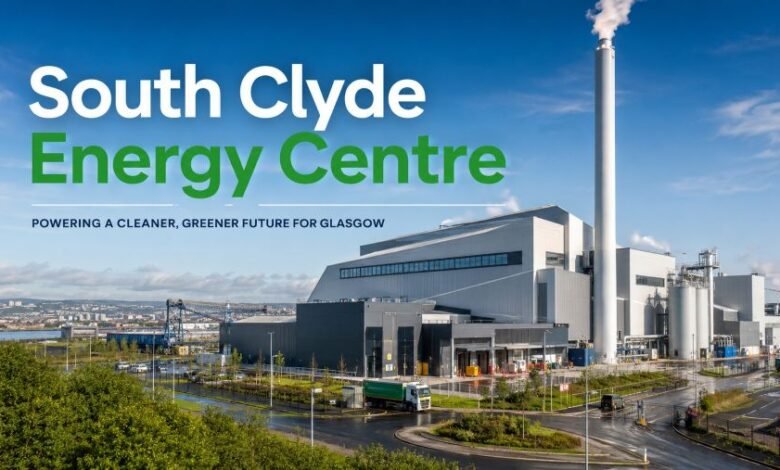
The South Clyde Energy Centre is a major energy-from-waste facility under construction in Glasgow, Scotland. It is designed to process non-hazardous waste that remains after recyclable materials have been removed.
The centre will use this residual waste to generate electricity instead of sending it to landfill or exporting it for treatment elsewhere. Commercial operations are currently expected to begin by the end of 2026.
Once operational, the facility is expected to process up to 350,000 tonnes of residual waste annually and generate up to 45 megawatts of gross electricity. Project information says this could provide enough electricity for the equivalent of around 70,000 homes.
South Clyde Energy Centre Overview
| Detail | Information |
|---|---|
| Facility name | South Clyde Energy Centre |
| Facility type | Energy-from-Waste facility |
| Location | Bogmoor Road, Glasgow |
| Postcode | G51 4SJ |
| Current status | Under construction |
| Expected operation | By the end of 2026 |
| Waste capacity | Up to 350,000 tonnes annually |
| Electricity capacity | Up to 45 MWe gross |
| Permanent jobs | Around 40 |
| Owners | Fortum and Gren Energy |
| Planning reference | 12/01293/DC |
The official site address is Bogmoor Road, Glasgow, G51 4SJ. The project is being developed through Fortum Glasgow Limited, a partnership between Fortum and Gren Energy.
What Is the South Clyde Energy Centre?
The South Clyde Energy Centre is an industrial facility that will produce energy from waste that cannot be economically or practically recycled.
It is not a household recycling centre where members of the public can drop off rubbish. It is also not intended to replace recycling.
Waste will be sorted and treated before arriving at the centre. Valuable materials such as glass, metals, paper, card and suitable plastics should be removed for recycling first. The remaining non-recyclable material can then be used as fuel.
The facility will mainly accept post-recycled, pre-treated and non-hazardous waste from residential, commercial and industrial sources.
Where Is the South Clyde Energy Centre?
The South Clyde Energy Centre is being constructed on land next to Bogmoor Road in the North Cardonald and Shieldhall area of Glasgow.
Its location provides access to the A8 and M8 road network. An approved routing strategy requires heavy goods vehicles connected with the facility to use the A8 corridor to reach junctions 25 and 26 of the M8.
The official site address is:
South Clyde Energy Centre
Bogmoor Road
Glasgow
G51 4SJ
The site already has an industrial character, which makes it more suitable for major waste and energy infrastructure than a residential location.
When Will the South Clyde Energy Centre Open?
The latest official project information says the South Clyde Energy Centre is expected to enter commercial operation by the end of 2026.
Construction and demolition work began toward the end of 2022. The plant will need to complete construction, testing and commissioning before normal commercial operations can begin.
A 2026 project update from Skanska also states that the facility will be commissioned during 2026.
The opening schedule may still depend on construction progress, equipment testing and regulatory requirements.
How Will the South Clyde Energy Centre Work?
Waste that cannot be recycled will be delivered to the facility in enclosed heavy goods vehicles.
The vehicles will enter a covered tipping hall, where the waste will be deposited into an enclosed storage bunker. A crane will lift the waste from the bunker and place it into a fuel hopper.
The waste will then move onto a specially designed grate and be treated at a high temperature.
Heat produced during this process will pass through a boiler and convert water into high-pressure steam. The steam will drive a turbine connected to an electricity generator.
The process can be understood in six simple steps:
- Residual waste arrives in enclosed vehicles.
- Waste is unloaded inside a covered building.
- A crane transfers the waste into a fuel hopper.
- The waste is treated at a high temperature.
- Heat converts water into steam.
- The steam drives a turbine to produce electricity.
The generated electricity will be exported to the local distribution network, where it can be used by homes and businesses.
How Much Waste Will It Process?
The South Clyde Energy Centre is designed to process up to approximately 350,000 tonnes of residual waste every year.
Residual waste is the material left after useful and commercially viable recyclable items have been removed.
The centre is intended to provide a local treatment option for waste that might otherwise be:
- Sent to landfill
- Transported to another part of the United Kingdom
- Exported overseas
- Treated at another energy-from-waste facility
The project owners compare the annual capacity with the amount of waste produced by approximately 380,000 households. This figure is a project estimate rather than the number of households directly supplying waste to the facility.
How Much Electricity Will It Generate?
The facility is designed to generate up to 45 MWe gross of electricity.
Project information commonly describes this as enough electricity to power the equivalent of around 70,000 homes. The exact number of homes represented can vary because household electricity use changes over time.
Energy-from-waste plants can normally produce electricity continuously when sufficient fuel is available and the plant is not undergoing maintenance.
This makes their electricity output more regular than weather-dependent sources such as wind and solar power. However, energy from waste is not emission-free and should not be confused with fully renewable electricity.
Is the South Clyde Energy Centre Renewable?
The South Clyde Energy Centre is not officially described as a fully renewable energy facility.
Some parts of residual waste may come from biological sources, including paper, card, wood or food waste. Other parts may contain fossil-based materials such as certain plastics.
The facility will recover useful energy from waste that might otherwise be landfilled or exported, but the combustion process will still produce carbon dioxide.
The project owners estimate that the facility could reduce greenhouse-gas emissions by around 67,000 tonnes of carbon-dioxide equivalent annually compared with landfilling the same waste.
This is a project estimate based on earlier Green Investment Group analysis. It is not an operating result because the facility has not yet entered commercial service.
Why Is the Centre Being Built?
Scotland introduced a ban on sending biodegradable municipal waste to landfill from 31 December 2025.
Biodegradable municipal waste includes materials such as food, paper and cardboard, as well as mixed waste containing biodegradable materials.
The ban increases the need for alternative ways to manage residual waste.
The preferred waste-management order remains:
- Prevent unnecessary waste
- Reuse products and materials
- Recycle suitable materials
- Recover energy from residual waste
- Use landfill only as a final option
The South Clyde Energy Centre supports the energy-recovery stage. It should process waste that remains after realistic recycling opportunities have been completed.
Who Owns the South Clyde Energy Centre?
The South Clyde Energy Centre is jointly owned by Fortum and Gren Energy through Fortum Glasgow Limited.
The current partnership was formed in June 2024 after Gren Energy acquired Macquarie Asset Management’s 50% interest in the project.
Fortum is a Nordic energy company with experience in energy production, heating and waste management.
Gren Energy develops and operates energy infrastructure, including district-heating and energy-generation systems in Northern Europe.
Who Is Building the Facility?
Several specialist engineering and construction companies have been involved in the South Clyde Energy Centre.
AFRY was appointed to provide engineering, procurement and construction-management services.
Kanadevia Inova is responsible for designing, building and commissioning the grate and boiler system.
Doosan Škoda Power is supplying the steam turbine and air-cooled condenser, while Luehr Filter is supplying the flue-gas treatment system.
Other contractors have worked on foundations, concrete structures, piling and supporting infrastructure.
South Clyde Energy Centre Jobs
The construction phase is expected to support approximately 500 jobs across different stages of the project.
Once the centre begins operating, it is expected to create around 40 permanent on-site jobs.
Operational positions may include:
- Shift technicians
- Control-room operators
- Mechanical engineers
- Electrical engineers
- Maintenance technicians
- Fuel-handling operators
- Environmental specialists
- Health and safety staff
- Chemistry and laboratory roles
- Administrative and operational-support staff
Recruitment for permanent operational roles began before the planned opening. However, vacancies can open and close as suitable candidates are appointed.
People interested in working at the centre should check the official project careers information or the appointed recruitment partner for current opportunities.
Will the Centre Produce Heat?
The South Clyde Energy Centre is being designed so that surplus heat could potentially be supplied to nearby businesses, industrial sites or a future district-heating system.
District heating uses insulated pipes to carry hot water or steam from a central energy source to several buildings.
This could allow heat that might otherwise be wasted to support:
- Commercial buildings
- Industrial facilities
- Public buildings
- Hospitals
- Universities
- Nearby homes
However, heat supply will depend on suitable customers, infrastructure and commercial agreements.
It should therefore be viewed as a future opportunity rather than a confirmed service that will automatically begin when the facility opens.
How Will Air Emissions Be Controlled?
The centre will use a flue-gas cleaning system designed to reduce pollutants before gases leave the stack.
During operation, probes inside the stack will continuously measure emissions through a Continuous Emissions Monitoring System.
The facility must operate within the conditions of an environmental permit regulated by the Scottish Environment Protection Agency, commonly known as SEPA.
SEPA has the authority to:
- Inspect the facility
- Check monitoring information
- Enforce environmental-permit conditions
- Require corrective action
- Stop operations where serious permit breaches occur
- Take legal action when appropriate
The centre will not be allowed to begin normal operations unless it can show that it meets its environmental-permit requirements.
What Will Come Out of the Stack?
According to the project’s official information, the main substances released through the stack will include water vapour, carbon dioxide, nitrogen and oxygen.
Small trace amounts of other pollutants may also be present. These must remain below the limits set in the environmental permit.
The visible material coming from an energy-from-waste stack may often be water vapour. However, visible steam does not mean that no other gases are being released.
Continuous monitoring and transparent reporting will therefore be important for public confidence.
Will the South Clyde Energy Centre Cause Smells?
Waste will be delivered in covered vehicles and unloaded inside an enclosed tipping hall.
The waste-reception area and storage bunker will be kept under negative pressure. This means air is drawn into the building rather than being allowed to flow freely outside.
Air taken from the waste-storage area will normally be directed into the combustion process.
Fast-closing doors and a carbon-filtration odour-control system are also planned, including for periods when the main plant is closed for maintenance.
These systems are designed to reduce odour, although their real performance will need to be assessed after the facility begins operating.
Will It Increase Traffic?
Waste deliveries and staff journeys will create additional vehicle movements around the site.
However, the project’s transport assessment concluded that the facility should not create significant problems for the wider road network.
Heavy goods vehicles will be required to use the A8 corridor to reach junctions 25 and 26 of the M8. This is intended to reduce unnecessary industrial traffic on surrounding local roads.
Monitoring and enforcement will be important to ensure that delivery vehicles follow the approved routes.
Will the Centre Be Noisy?
Most waste handling, treatment and electricity-generation activities will take place inside industrial buildings.
The project’s environmental assessment concluded that the wider noise impact should not be significant.
Background-noise monitoring was completed as part of the environmental assessment and planning process.
Residents close to the site may still notice construction work, delivery vehicles or normal industrial activity. Operational performance should therefore continue to be reviewed after the centre opens.
What Happens to Ash and Metals?
Energy-from-waste treatment produces several types of residue.
Metals may be recovered from the remaining material and sent for recycling.
Incinerator bottom ash may also be processed and used as a secondary aggregate in certain construction products, subject to quality and environmental requirements.
Not every part of the waste disappears during treatment. Some residues will still require further processing or disposal.
Planning Permission and Project History
The original planning consent for the site was granted to Peel Environmental in 2012.
Fortum Glasgow acquired the site from Peel in 2019.
The planning-consent reference is 12/01293/DC. A later application proposed limited design changes to the main building without changing its general height or overall visual impact.
Full construction work began after the project reached its investment and development stages in 2022.
Carbon Capture Potential
The South Clyde Energy Centre has been designed with the possibility of adding carbon-capture technology in the future.
Carbon capture could collect some carbon dioxide produced during waste treatment before it reaches the atmosphere.
The captured carbon might then be permanently stored or used as an industrial material.
However, no operating carbon-capture system is currently confirmed for the facility’s opening. It remains a possible future development and should not be presented as part of the centre’s initial operations.
Benefits for Glasgow
The South Clyde Energy Centre may provide several benefits for Glasgow and the surrounding region.
These include:
- More local residual-waste treatment capacity
- Reduced dependence on landfill
- Less need to export waste for treatment
- Electricity generation for the local network
- Around 40 permanent operational jobs
- Supply-chain opportunities for local businesses
- Possible future district-heating connections
- Recovery of metals and useful construction aggregates
The centre may also help Scotland respond to the landfill ban that took effect at the end of 2025.
Local Concerns and Questions
Large waste-treatment facilities can also create public concerns.
Residents may reasonably ask questions about:
- Air quality
- Carbon emissions
- Traffic
- Noise
- Odour
- Recycling rates
- Environmental monitoring
- Public access to emissions information
- Future carbon-capture plans
The value of the project will depend on more than its electricity output.
Strong regulation, transparent monitoring, reliable recycling systems and open communication with local communities will all be important.
Does the Centre Reduce the Need for Recycling?
No. The South Clyde Energy Centre does not remove the need to recycle.
Recycling normally saves materials so they can be used again. Energy recovery destroys the original product while recovering part of its energy value.
The centre should therefore accept residual waste only after suitable recyclable materials have been removed.
Waste prevention, reuse and recycling remain more important than burning waste for energy.
Frequently Asked Questions
Is the South Clyde Energy Centre open?
No. The facility remains under construction and is expected to begin commercial operations by the end of 2026.
Where is the South Clyde Energy Centre?
It is located on Bogmoor Road in Glasgow, Scotland. The site postcode is G51 4SJ.
What does the South Clyde Energy Centre do?
It processes residual, non-recyclable waste at high temperatures and uses the resulting heat to produce steam and generate electricity.
How much waste will it process?
The facility is designed to process up to approximately 350,000 tonnes of residual waste annually.
How much electricity will it generate?
It is expected to generate up to 45 MWe gross of electricity, commonly described as enough for the equivalent of around 70,000 homes.
Who owns the South Clyde Energy Centre?
It is jointly owned by Fortum and Gren Energy through Fortum Glasgow Limited.
How many jobs will it create?
The construction phase is expected to support around 500 jobs, while approximately 40 permanent positions are expected during operation.
Is it a recycling centre?
No. It is an energy-from-waste facility designed to process material remaining after recycling.
Will it accept hazardous waste?
The published project information says the centre will accept post-recycled, pre-treated and non-hazardous residential, commercial and industrial waste.
Is the facility fully renewable?
No. The project’s own information states that it is not a fully renewable facility, although it will recover useful energy from residual waste.
Who will regulate the centre?
The facility will be environmentally regulated by SEPA through a permit, inspections and emissions-monitoring requirements.
Final Thoughts
The South Clyde Energy Centre is one of Glasgow’s most important new waste and energy infrastructure projects.
It is designed to process up to 350,000 tonnes of residual waste per year and generate up to 45 MWe of electricity. Commercial operation is expected by the end of 2026.
The facility may reduce Scotland’s dependence on landfill and provide a local source of electricity, employment and possible future heat.
However, it should not be treated as a replacement for reducing waste, reusing products or recycling materials.
Its long-term success will depend on reliable operation, strict environmental regulation, transparent emissions reporting, responsible waste sorting and meaningful engagement with nearby communities.